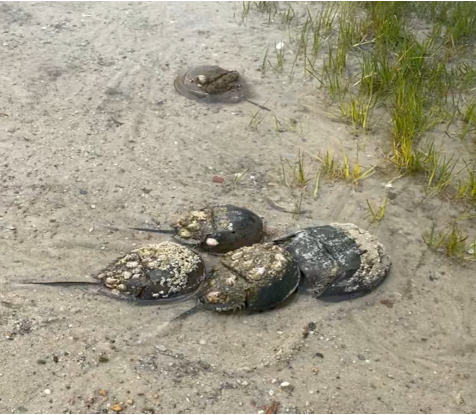
Atlantic Horseshoe Crabs (Limulus polyphemus) are an emblematic species of our coastal ecology. They are keystone species which have shared our waters for over 400 million years.
Horseshoe crabs are not true crabs but are instead arachnids which include spiders and scorpions. They occur in shallow coastal waters on soft, sandy or muddy bottoms where they search for worms and other marine invertebrates. This overturning of sediments is akin to roto-tilling a garden and has significant benefits for shellfish populations and overall coastal health.
They reach sexual maturity at about 8-10 years of age and may live 20 years. They visit the intertidal zone during spring high tides to breed and lay eggs. Migratory bird species, especially some species of sandpipers time their annual northern migrations to coincide with the millions of fat and protein rich eggs the horseshoe crabs provide.
Today, populations of this critical species are threatened by over-harvesting for bait, and for the medical industry, as well as habitat loss and climate change