Rising sea levels are increasing the frequency and severity of coastal flooding in and around the harbor. This threatens low-lying habitats, infrastructure, and freshwater systems through saltwater intrusion. As these changes accelerate, they can permanently alter the harbor’s landscape and ecological function.
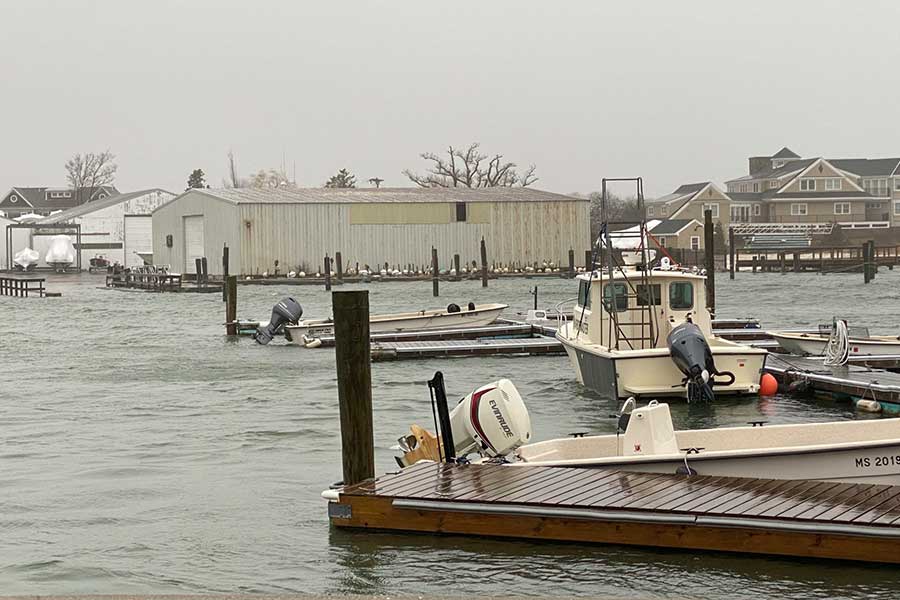
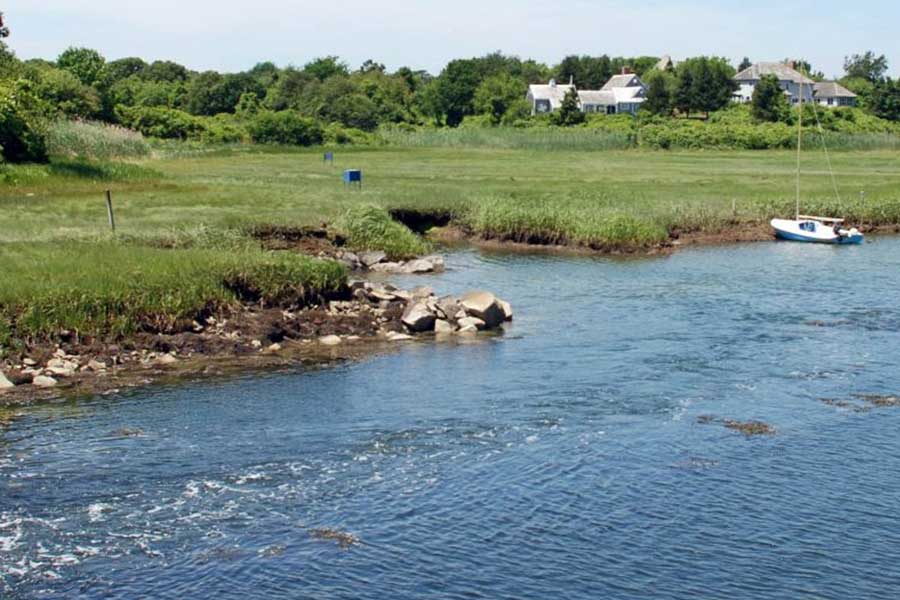
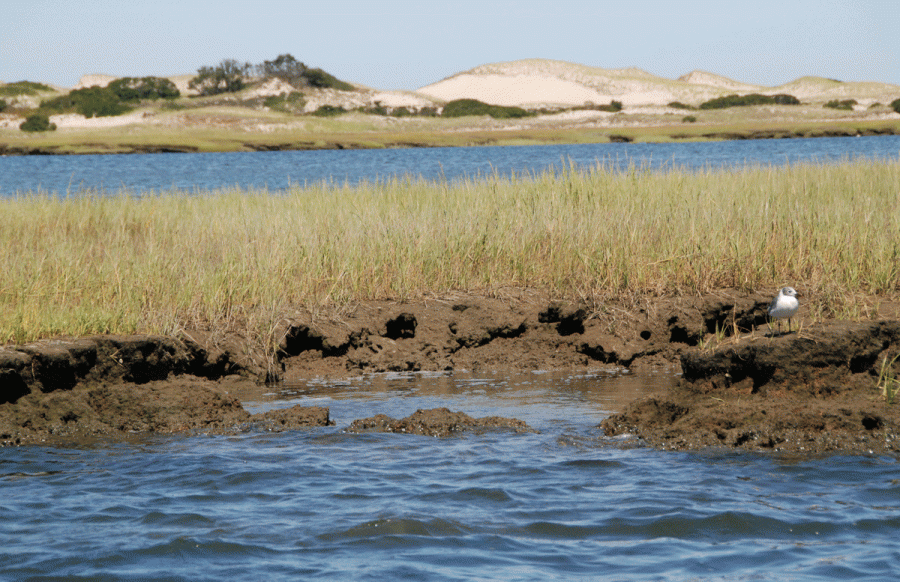
Sea level rise is gradually reshaping the shoreline and hydrodynamics of Barnstable Harbor. As water levels increase, low-lying areas become more vulnerable to flooding and saltwater intrusion. This can alter critical habitats such as salt marshes, which serve as natural buffers and nurseries for marine life. Long-term, these changes threaten both the ecological function of the harbor and nearby infrastructure.
Planning for sea level rise involves both adaptation and forward-thinking coastal management. Protecting and restoring natural buffers like salt marshes allows the shoreline to adjust over time. Strategic land use decisions can reduce risks to vulnerable areas and infrastructure. These approaches help preserve critical habitats while maintaining the harbor’s resilience in a changing climate.
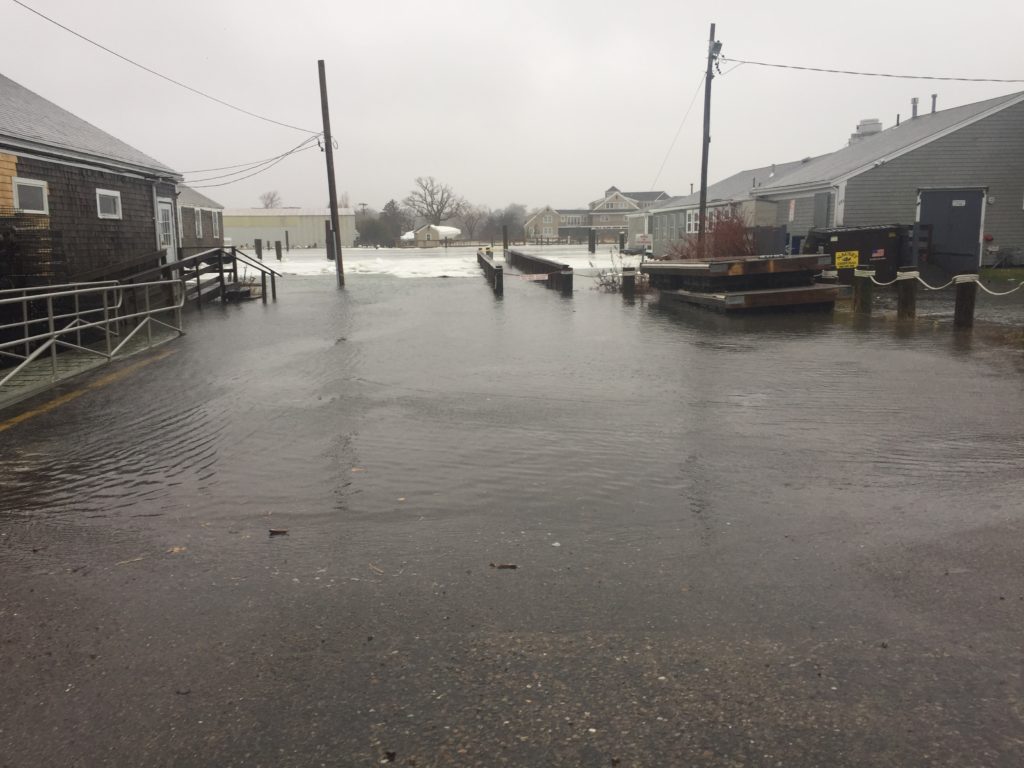
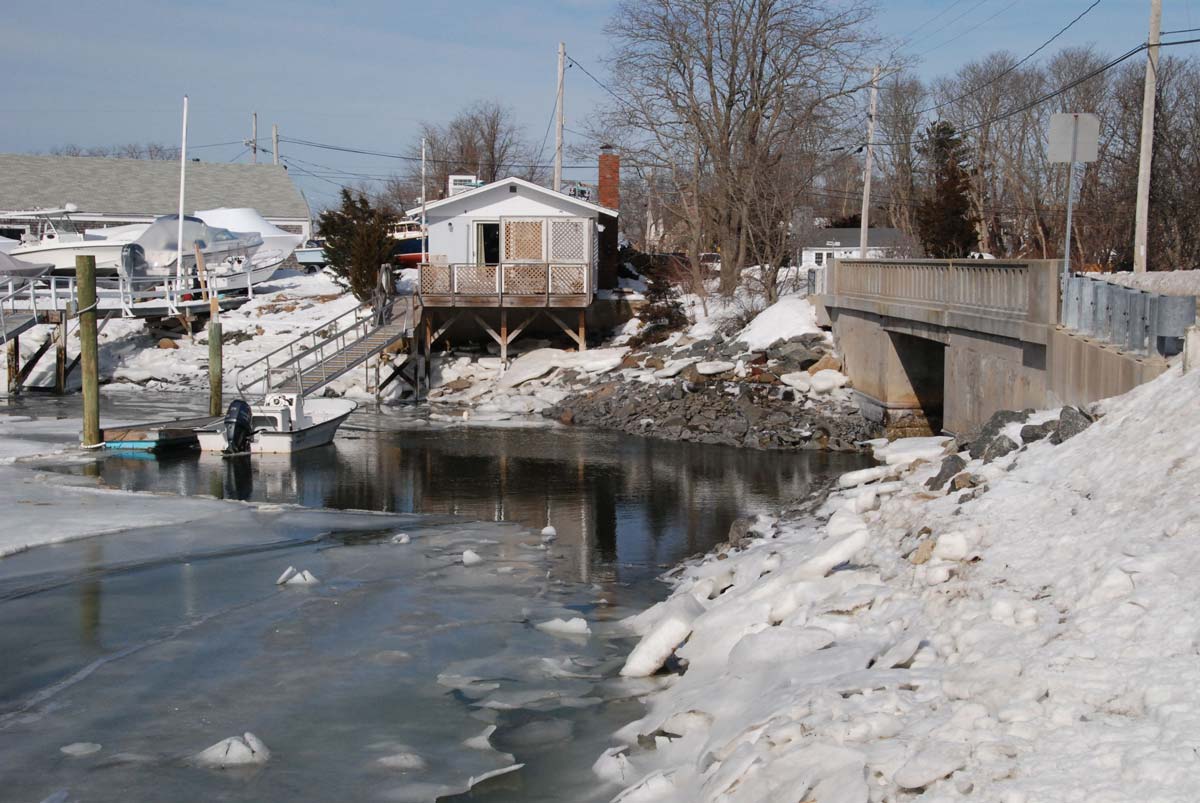
Storm Surge & Flooding were just beginning to reach their peak in the picture above. Shortly afterwards, the seawater breached the marina bulkhead, Commerce and Freezer Roads, Millway Beach Seawall, and many other areas on Barnstable Harbor’s shoreline.
Climate related events are most likely inching their way to more tremendous storm scenarios like this one. Coastal Resiliency, the ability to “bounce back” after major storm events, as well as the ability to “weather” these storms.
Decisions as to whether it is better to rebuild and buffer, or retreat are specific to each instance of intrusion are often difficult to agree upon.
Adaptation is another important element of Coastal Resilience
The Blish Point/ Commerce Road community continues to pursue the town, local and state officials in their efforts to find solutions to protect their property and their property values.
Access research, surveys, and environmental studies that inform decisions about the harbor’s management and long-term sustainability.